I was in Sint Maarten, looking for a boat to cross the Atlantic, when I found Captain Richard. He is the closest real-life person I’ve met to Jack Sparrow. He has been sailing for 22 years, including across the Pacific, when his mast snapped and he rigged it with the boom (the bottom arm of the mast that is normally parallel to the deck) perpendicular and sailed like that for ten days. Yesterday, when asked what time he was thinking of going to get provisions for our multi-week trans-Atlantic voyage, he said, “Mate, I don’t even know what I’m doing in ten minutes.” He then spent the next hour so deeply invested in splicing rope with a hot knife that he didn’t hear me say goodbye.
He lit up when he heard I needed a place to sleep in the days leading up to our crossing.
“My boat’s tied up to an abandoned rig I’m looking after for a friend,” he said. “A convicted smuggler, actually. You’re welcome to sleep in there.”
Vincent was a sailor with a simple, honest side hustle: smuggling cigarettes into Guadeloupe. He was a well-connected man, and if you know the right people, sneaking a few dozen kilos of Panamanian tobacco into the French Antilles is not such a tall task.
“What Vincent did not consider,” Richard explained to me, “is that cell phones are very vulnerable devices. If you post about your smuggled cigarettes on Facebook, the Coast Guard is likely to find out about it.”
Cigarettes aren’t really so bad, so he only got four months in prison. Richard hadn’t heard from Vincent since, but he was looking after his other half-alive boat, Loreley, which had three cabins in which me and the other crew were honored to sleep.
Sitting around at the Soggy Dollar bar, Des, a sharp, weather-worn Irish sailor with stories from the remotest places on Earth, pulled out his laptop to show us photos he took after the 2017 hurricane in Sint Maarten.
“A charter yacht moored on a 10-ton concrete block got dragged across the lagoon—with the mooring still on it,” he said, pausing on a photo of a fully intact catamaran that got lifted up and placed down, as if by the very Hand of God, smack dab in a house’s driveway.
“And that,” added Richard, pointing across the lagoon, “is where James the American was hunkered down. The first part of the storm dragged him right under the bridge, then another couple kilometers to the other end of the lagoon. When the eye of the hurricane passes over, there’s about a half hour of complete calm. Well old James pops his head out of his hatch and sees his mast is completely gone—taken clean off by the bridge. Then the other wall of the hurricane comes and he hunkers back down, only this time he gets dragged back the same way he came, all the way to Sandy Ground, which if you didn’t know is the roughest neighborhood on this island. And he washes up and the guys from Sandy Ground are checking out his boat for whatever they can scrap. And scraggly old James, who’s just been through hell, springs out from his wreck of a Bavaria, armed to the teeth—Americans, for chrissakes—and starts scarin’ ‘em with his tongue out, brandishing his pistol and all. I saw him after that, he looked pretty shell-shocked.”
“I can’t imagine why.”
The next day, we moved our bags from Loreley to Lanme, the boat we’re setting sailing on tomorrow. It’s a 38-foot charter catamaran and it is a very nice place to be.

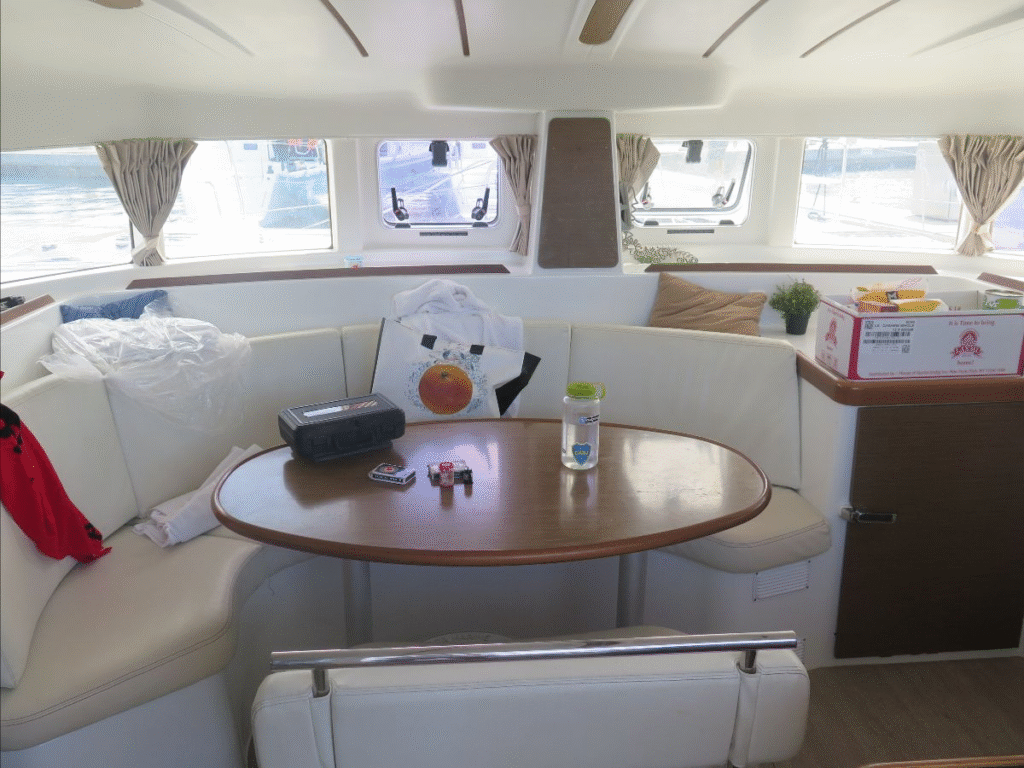

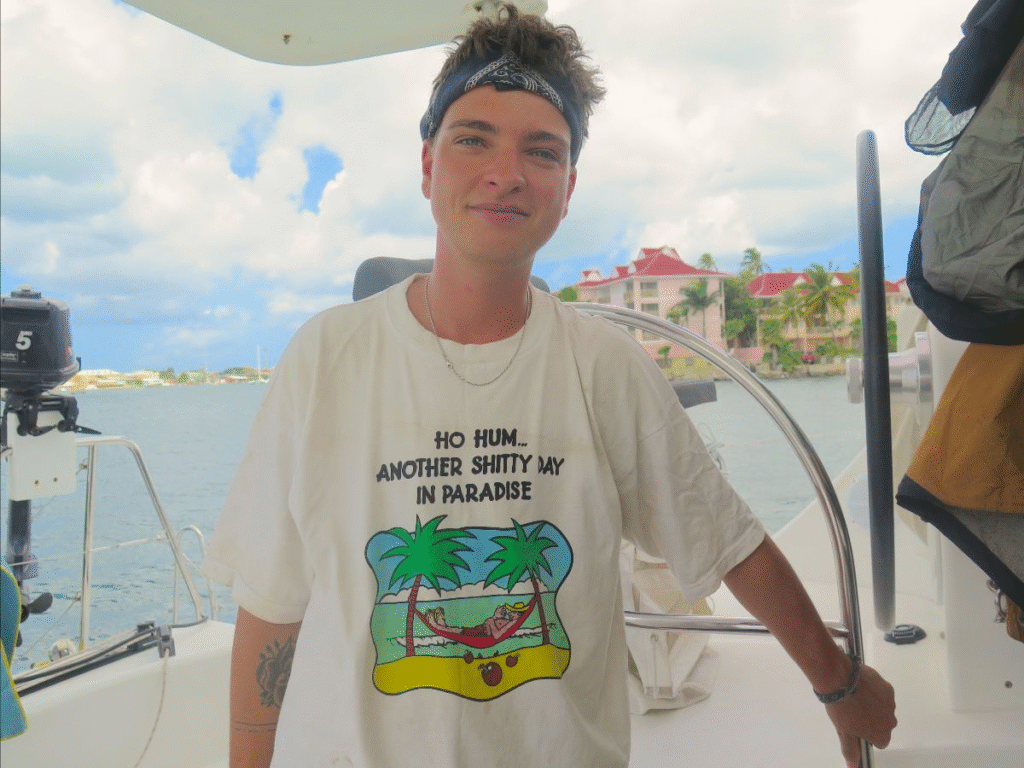
If I don’t respond to your messages, it’s because I’m vomiting my guts out on a floating 2014 single-family All-American Pipe Dream and haven’t seen land in three weeks. And because, as an Responsible citizen of the Modern Age, I take a ~digital detox~ once in a while. Not that I’d take the Starlink off the boat if there was one, there just isn’t.
And to top it all off with a bit of good news: I published an article yesterday about the research I was doing for over a year in Argentina. If you’re interested, you can read it here: https://globalejournal.org/global-e/may-2025/decoupling-and-politics-legitimacy-buenos-aires-bachilleratos-populares
Until next time,
Lucas