Happy Monday!
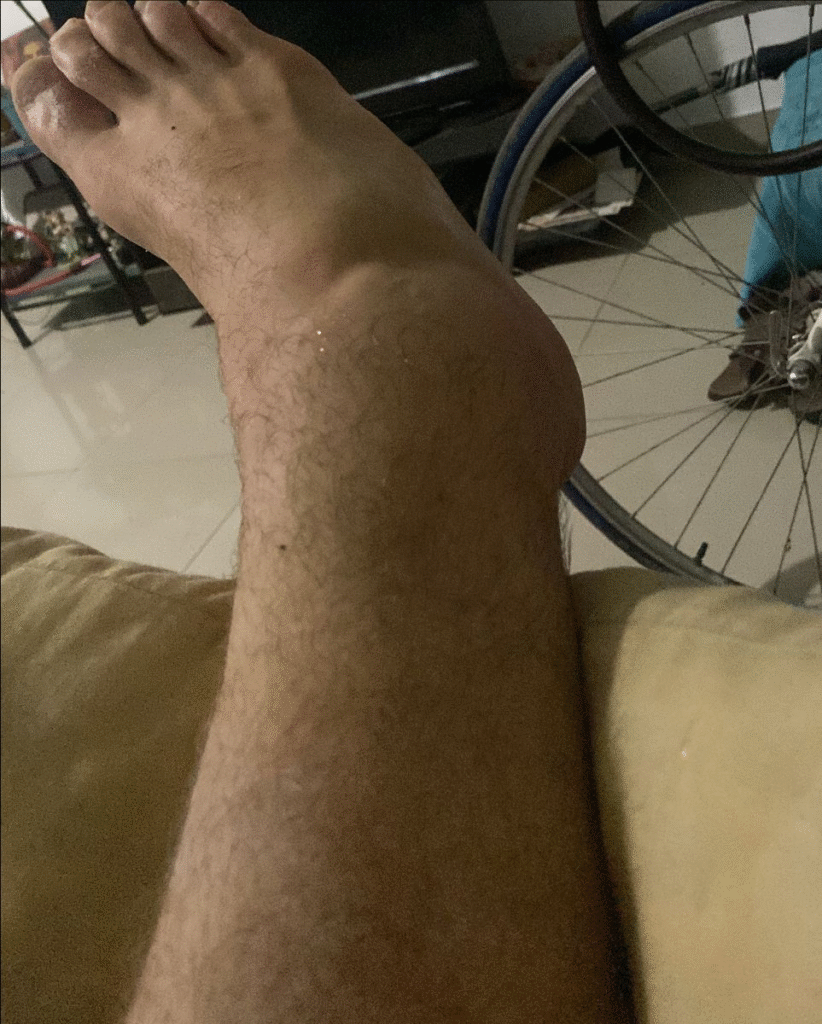
It’s been a busy month in my corner. I spent it all on crutches, as I tore a ligament in my ankle at the climbing gym. I later learned that a torn ligament is the same thing as a sprain, which was disappointing. Sprains happen all the time. Anyone can sprain anything. But tearing a ligament? Now there’s an injury.
But I was approaching the three-month limit of my tourist visa in Tunisia, so I had to leave and re-enter the country to reset it. I have some good French friends I met in Argentina and was eager to see again, so I took the excuse to pay them a visit in the city of grime & cheese (though it was shimmering by American standards…)
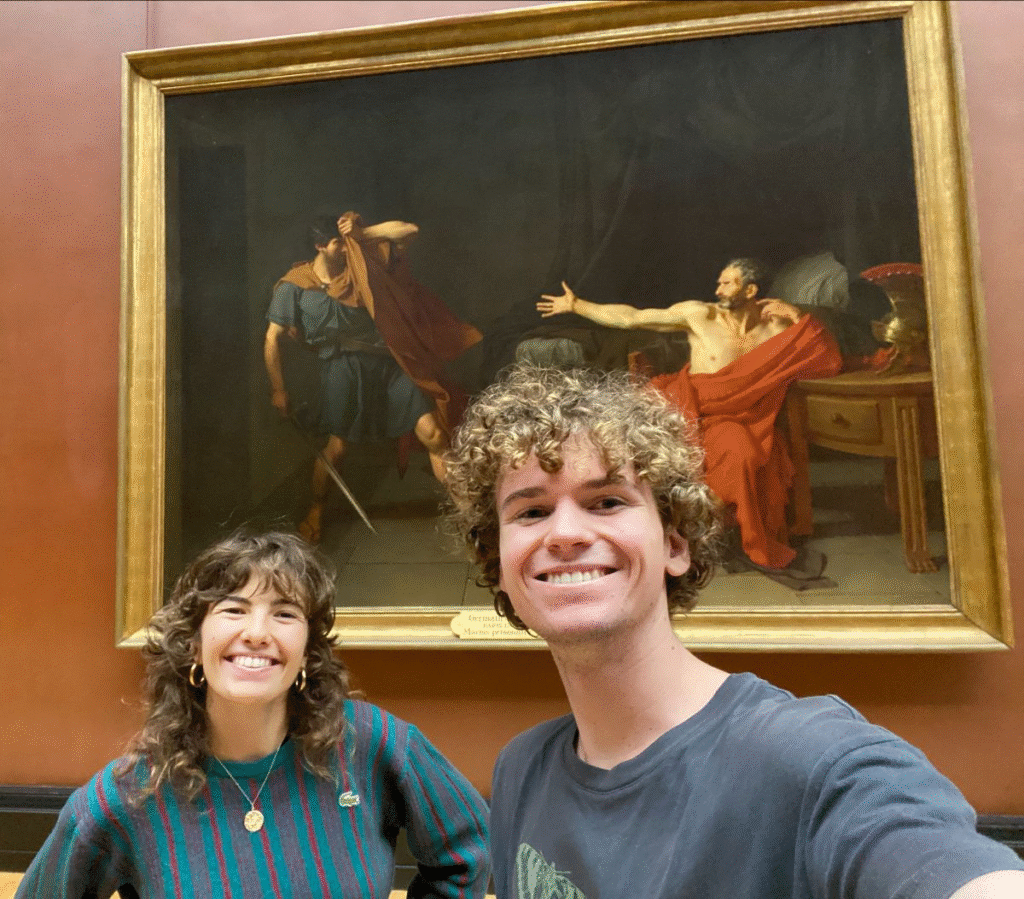
Paris and crutches didn’t exactly harmonize like Beaujolais red and a wheel of Brie De Meaux, but the good news is that Noemie studied at the Louvre last year, so I basically got the coolest museum tour of all time.
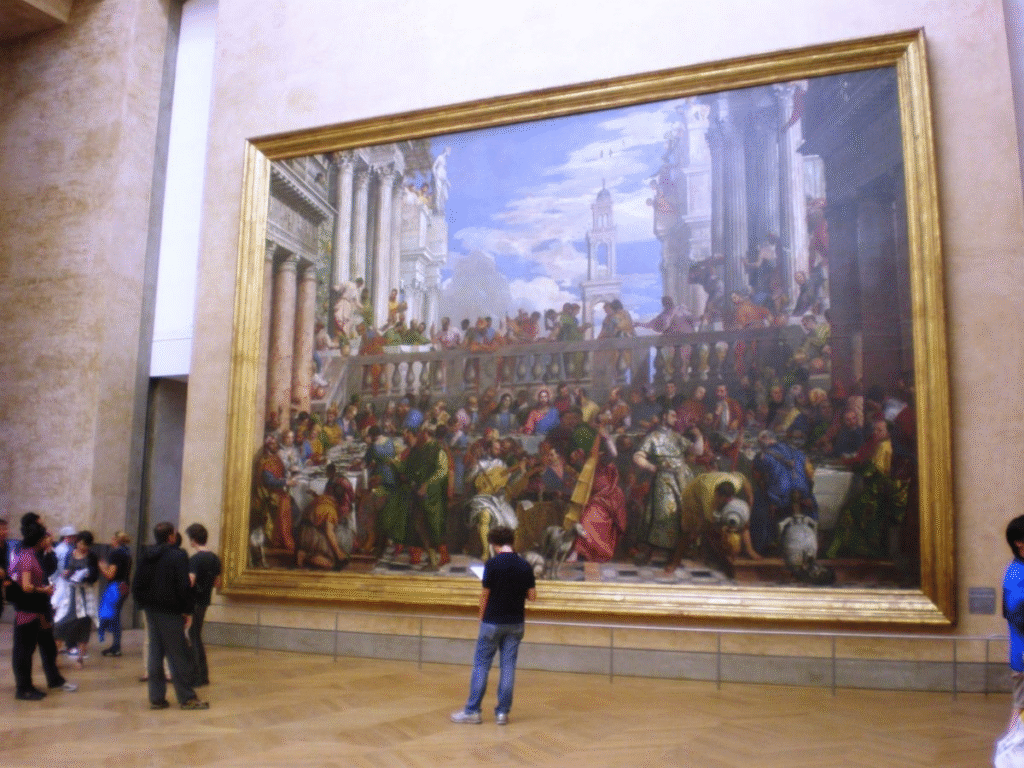
It turns out that right across from the Mona Lisa is an even more stunning and intricate painting, The Wedding Feast at Cana. Stolen by Napoleon (a trait it only shares with about half the items in the museum) from the Italians in 1797, it was certainly among my favorites. The festive atmosphere and range of personalities were a welcome break from the 17th century hall, which was basically an exhibition of the Catholic church’s propaganda campaign to steal its authority back from the Protestants. Boooring!
Additionally, I have an exciting thing to share, which I will do by way of a story:
It had been a tiring weekend. I was writing an article about whether human history has a trajectory, and I became extremely frustrated. The article was going to be the first post on my website, Human Conditioning, where I would publish a bunch of essays on philosophy topics I cared about. I had purchased the website domain over a year ago, and since then, carefully collected fragments of thoughts from which to launch my essays.
To give you an idea, I just went and checked the “Human Conditioning” folder in my Google Drive and counted 29 files. They range from completely blank documents with nothing more than a title, to a 3,000-word video essay script I wrote three years ago. Mostly, though, the documents in the “Human Conditioning” folder are a few-paragraph summaries of essay ideas. I call them inklings.
An inkling begins as an idea, out in space, that is too exciting to leave in the ether of thought. During an entrancing and poorly-understood neural process called “writing it down,” I translate the idea into a collection of visual symbols that conveniently preserve its meaning. Next, I let the inkling collect dust in my Google Drive for six months, at which point it’s ripe for me to skim on weeknight at 2am, causing me to feel extremely distressed by the amount of work required to make it a coherent essay, and give up entirely.
I had put an insane amount of hope into this idea of starting my own collection of philosophy essays, yet a year later, I was drowning in inklings without having finished a single article. I had come close, sure—but they just never seemed done. So two months ago, I took the weekend to set things right: I was going to finish my first essay.
But that weekend, I didn’t just feel completely incapable of expressing myself, which is an inevitable fact of writing philosophy. I felt a deeper failure for having bought a website, spent an entire year “philosophizing,” and having absolutely nothing to show for it. To make matters worse, the point of Human Conditioning was that it would mirror me. Like a collection of self-portraits, I wanted to capture my mind from many different angles. Each sentence wasn’t just an idea, it represented a part of my identity. I wanted to share my words with the world, and because those words were so personal, I wanted each one to be just right.
Unsurprisingly, my desire for every word to be a persuasive, coherent expression of my thought was irreconcilable with the pressure to deliver on a deadline. After a day of painstaking typing and deleting, I became convinced that Human Conditioning was causing me more stress than any passion project was worth, and, with a sigh of sadness and relief, I let it go. Writing philosophy was not for me.
Then, earlier this week, something happened that gave me a different perspective. I was rushing to finish an overdue blog for a hotel owner I really respected. Even though I had written similar content a dozen times for other clients, I couldn’t seem to string a paragraph together. The reason wasn’t procrastination or lack of coffee, but the fact that I cared way more than normal about the piece. I wanted it to impress the owner, and since I enjoyed the content, I was eager to put it at the top of my portfolio. But the more I thought about how great I wanted the article to be—never mind the deadline whizzing past—the more I felt paralyzed. By putting so many expectations on an innocuous blog, I had turned it into an act of self-definition.
Rather than continue to wrestle with my keyboard, I went for a long walk in the park and let my mind wander. It wandered through the things I’d like to do in the future, to the past, and to different people. Left, right, up, down, wherever. Something miraculous happens when you walk, because it completely eased my anxieties about the article’s relationship to my identity or future success. I suspect that all of these thoughts about different times and places made the blog feel unimportant in comparison. Whatever the cause, I felt completely relaxed when I returned home, and I finished the article two hours later.
The whole experience made me wonder: what projects hadn’t I finished, not because they fell short of someone else’s expectations, but because they fell short of my own? How many times had I abandoned a pursuit simply because I was attached to a certain outcome? I also reflected that some of my favorite projects I’ve done—including starting this blog—I did without any attachment to a specific result.
The idea of being free from our own expectations is a wonderful thought. Unfortunately, it’s not possible to go around “without expectations”—indeed, why would we do anything at all if we didn’t expect certain outcomes?
Perhaps the danger is not in having expectations, but in mistaking those expectations for absolute metrics of success. How many times have your hopes for a project gotten torched, only for you to later realize that it was completely intact, on track, acceptable, etc.? Or that the end result, though far from what you anticipated, was super cool in its own way?
As for me, I had clearly fallen head over heels with the idea of one specific final product for Human Conditioning. And as soon as I was forced to change my expectations—for instance, realizing I might not be able to write a glowing rebuttal of John Haywood’s account of the trajectory of history in 1,500 pithy words—I threw my hands up and walked away. With the benefit of hindsight, I see that nothing about the project was doomed or damaged, even though my expectations certainly were.
As a prophetic Ozzie once told me, don’t let Perfect get in the way of Good Enough. Today, in line with that wonderful seed of wisdom, I am beyond relived to announce that the first short essay of Human Conditioning, Faceless Objects, is available for your reading pleasure at human-conditioning.com.
Does the text represent me? Is it a string of words collected by worms in my brain? Zuckerberg’s MetaMind chip? A sewer rat under my toque blanche? The author will leave those questions for you to decide.
Until next time,
Lucas