Happy Halloween!
Or, if you’re in Tunisia, just happy Friday. In Arabic, “Friday” is translated as “nhar jem3,” nhar meaning “day” and jem3 being the word for mosque. When writing Arabic in the Latin script, 3 stands in for a throaty “ah” sound that doesn’t exist in English but is kind of like the sound you make when the dentist tells you to open wide and say “aaahhh.” The number 3 is used because it resembles the Arabic letter ع (ain).
Friday is a holy day for Muslims, which is why it takes its name from the word for mosque. It’s kind of like if Sunday were called “church day.” The word jem3 comes from the root jm3, meaning “group” or “gathering.” Before modern communication, Fridays were when announcements were made at the mosque and news was shared in the community. Today, people still gather on nhar jem3 after the midday prayer for the imam’s discourse about challenges and current topics in the local community and the ummah (broader community of Muslims).
The root jm3 also appears in many other words involving sharing or gathering. For example, you can address a group of people as “jm3” in the same way you’d say “hey guys,” the word for university is “jem3a,” and a shared taxi is called a “taxi jeme3i.”
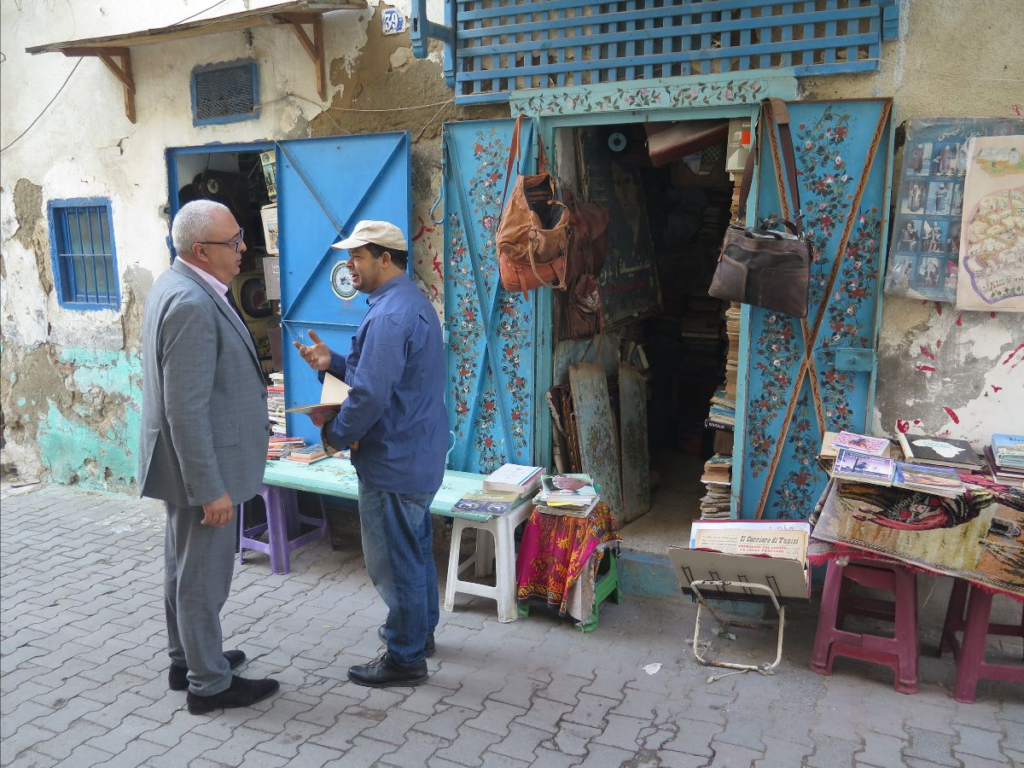
Nhar jem3 is one of my favorite days to walk around because people tend to be extra friendly. Especially in the medina, the cultural and religious center of the city, people take care to greet each other and often stop to chat in the street. I think most non-muslims would agree that nhar jm3retains its roots as a word for gathering and community as much as its associations with the mosque.
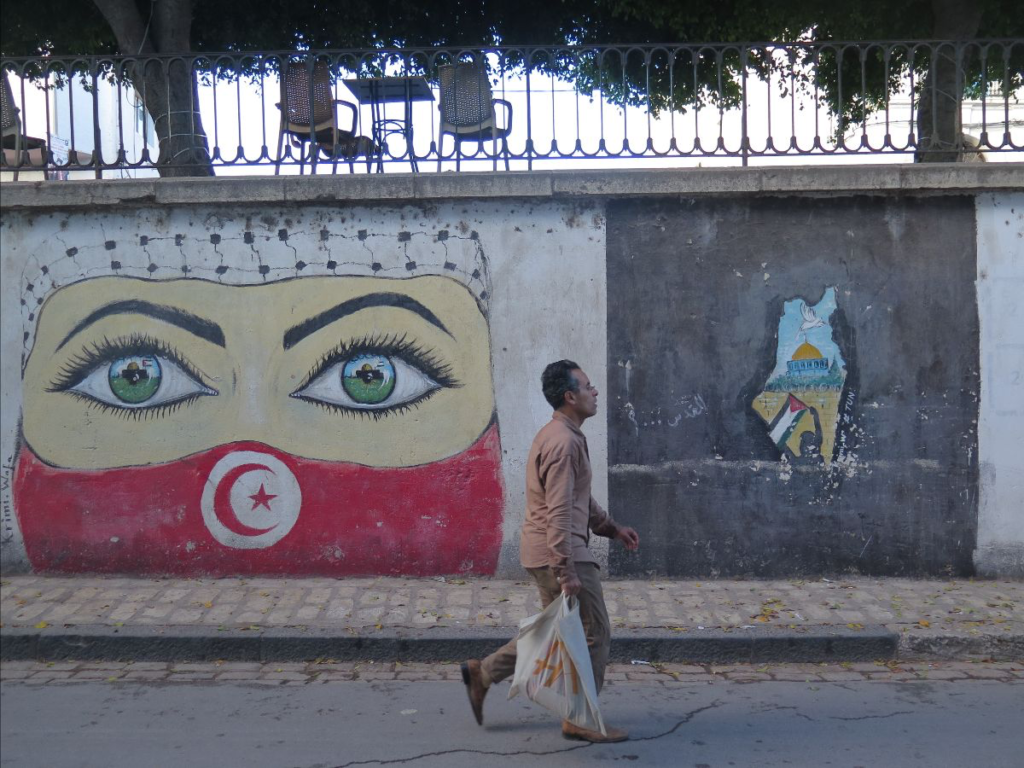
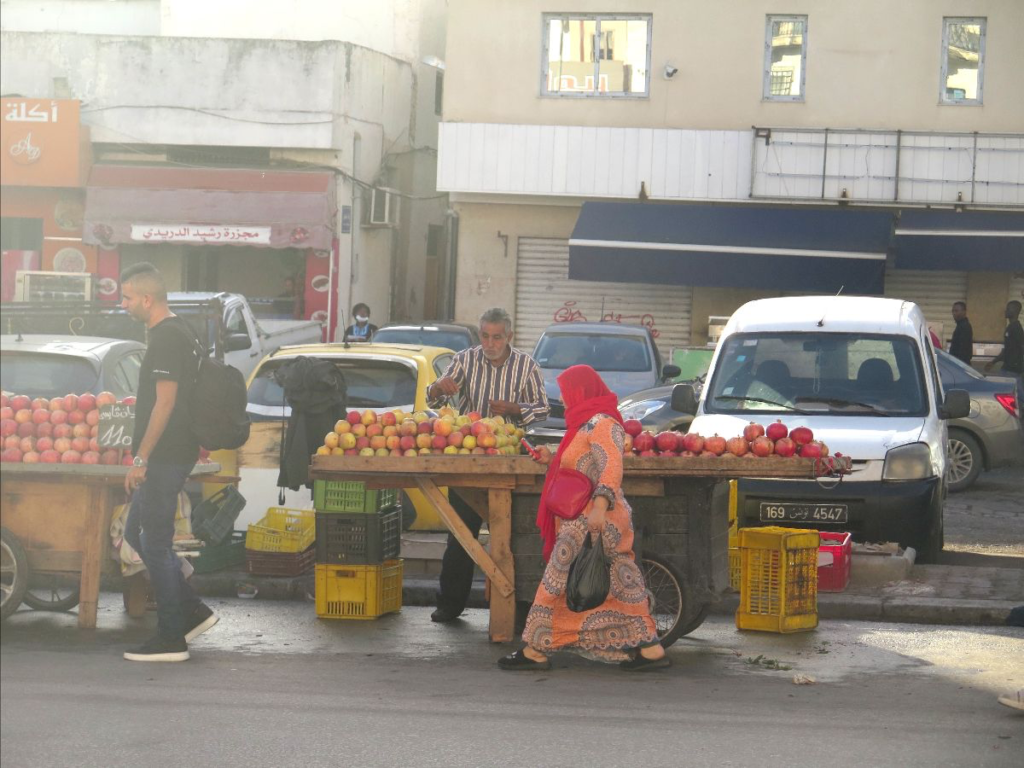
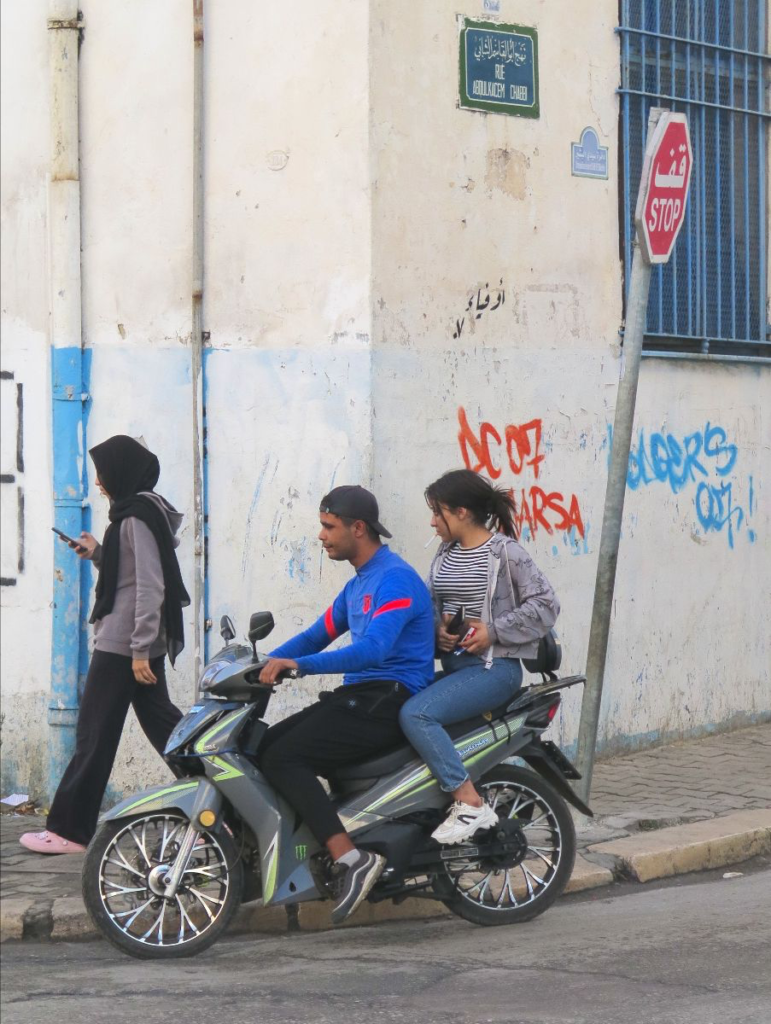
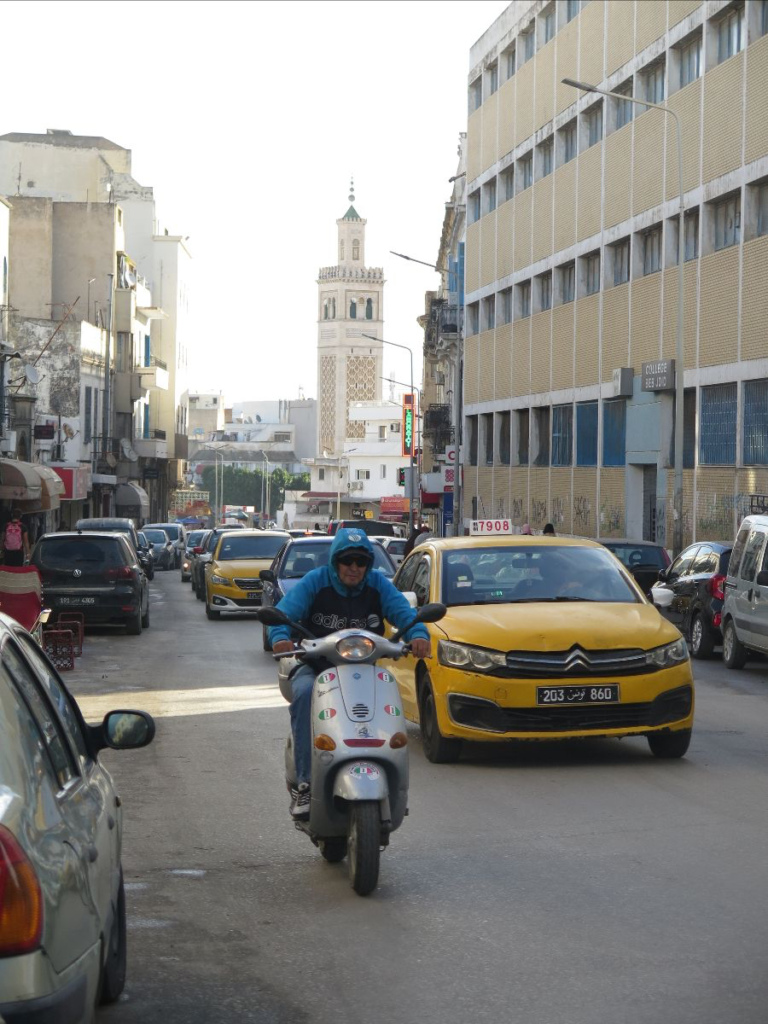
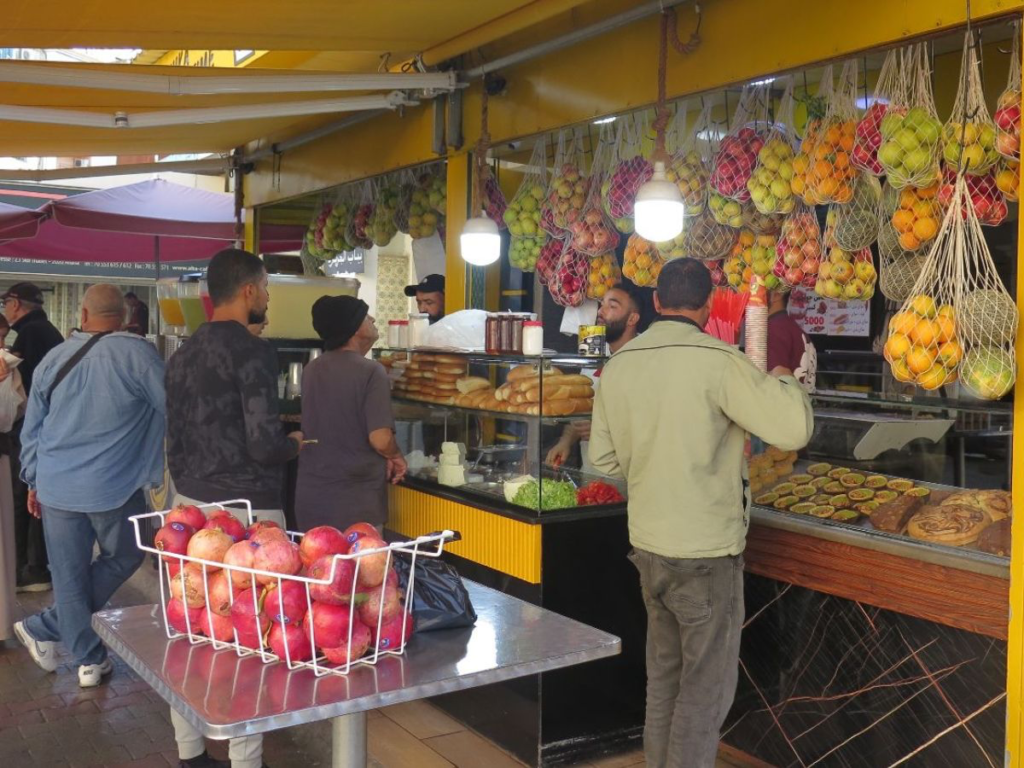
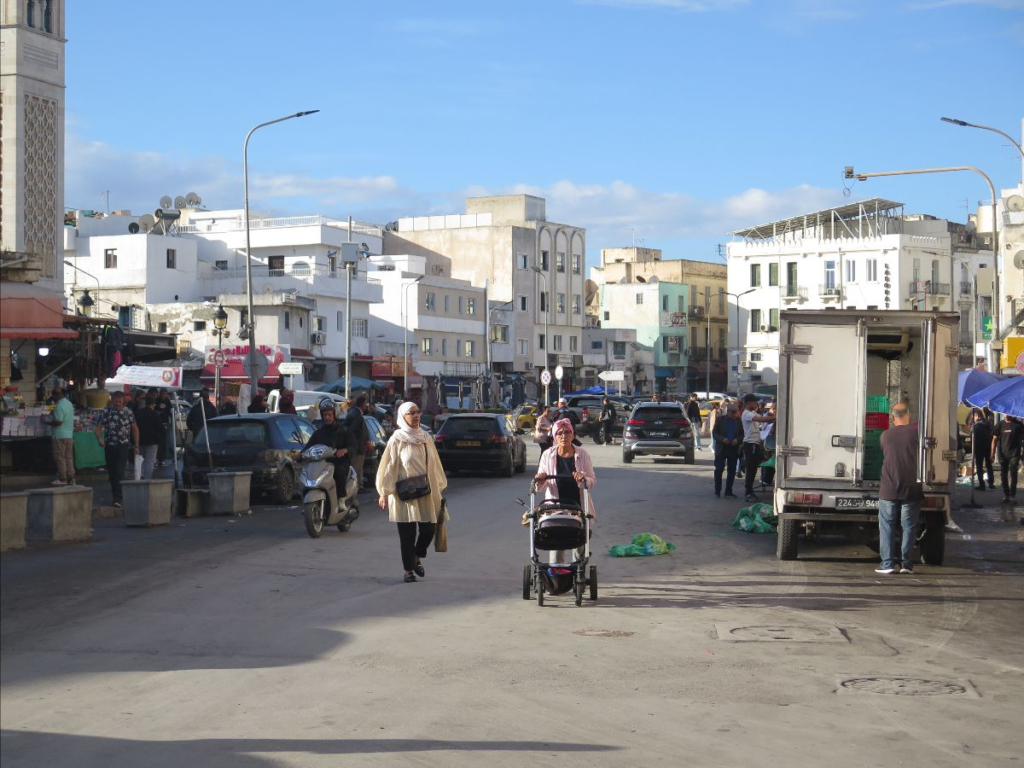
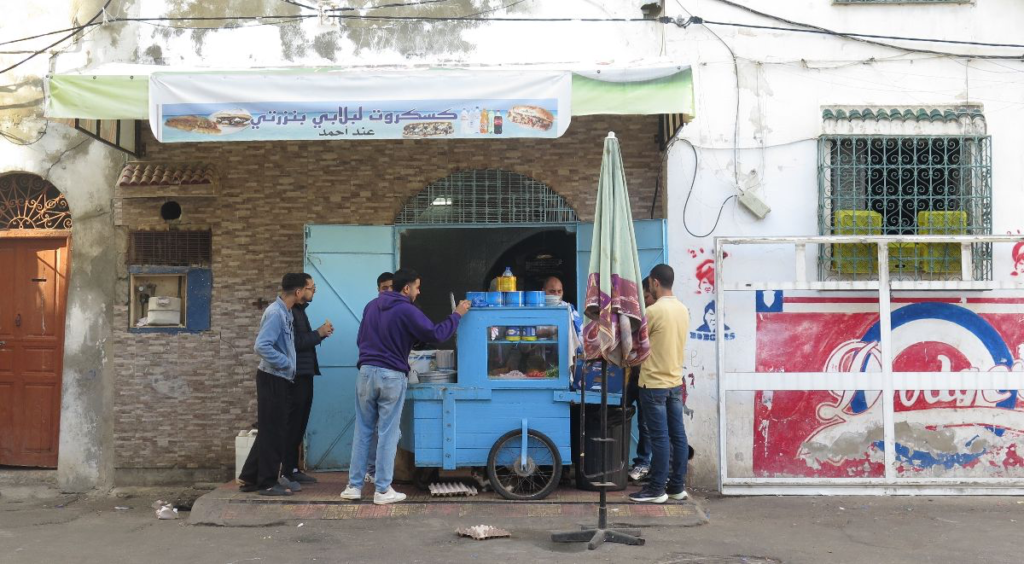
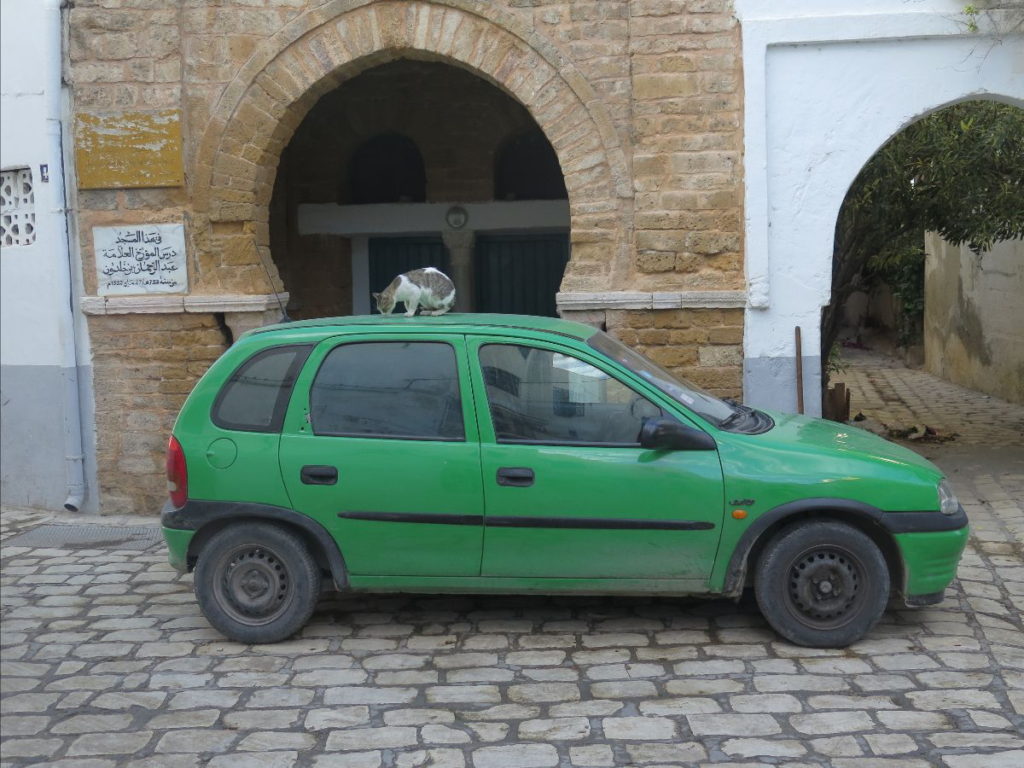
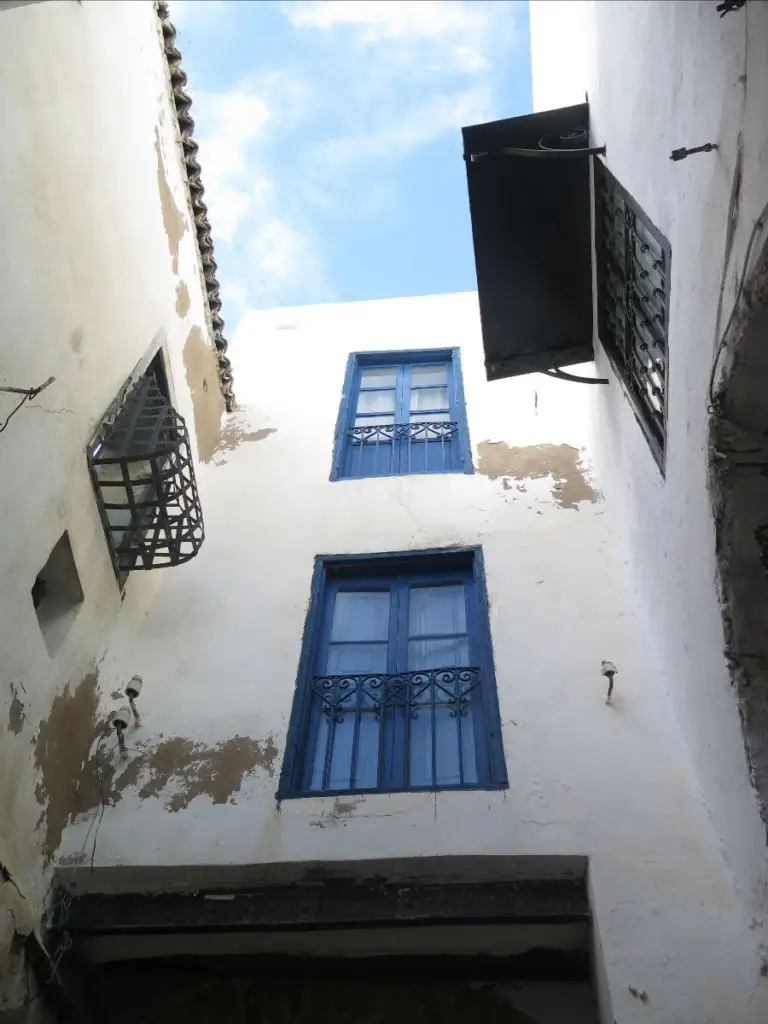
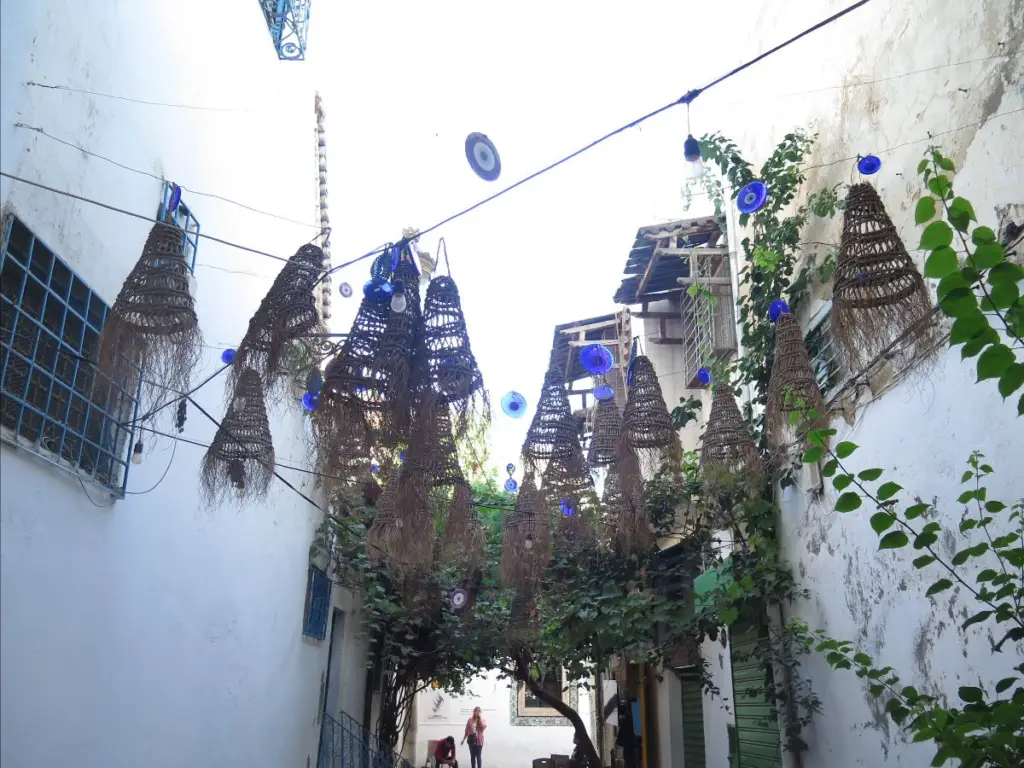
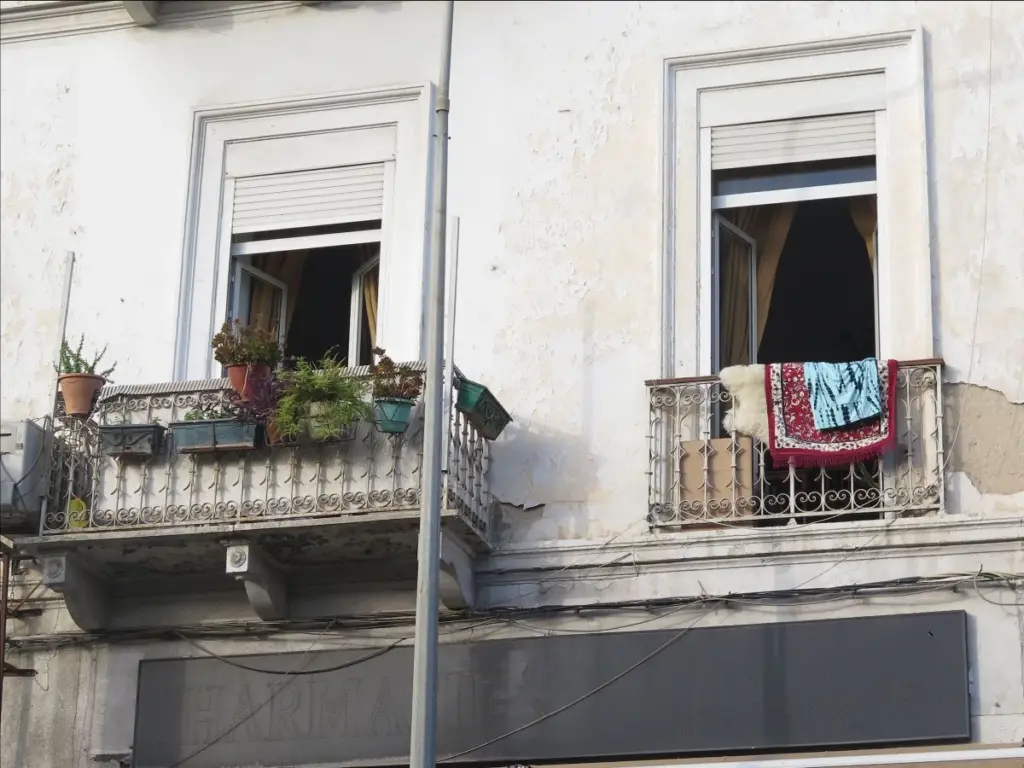
On this wonderful 31st, while the U.S. celebrates its own rituals of social congregation, performative dress, and getting absolutely plastered, I’ll share some pictures of your average nhar jem3 in Tunis. Without further ado, I present Tunisian Halloween.


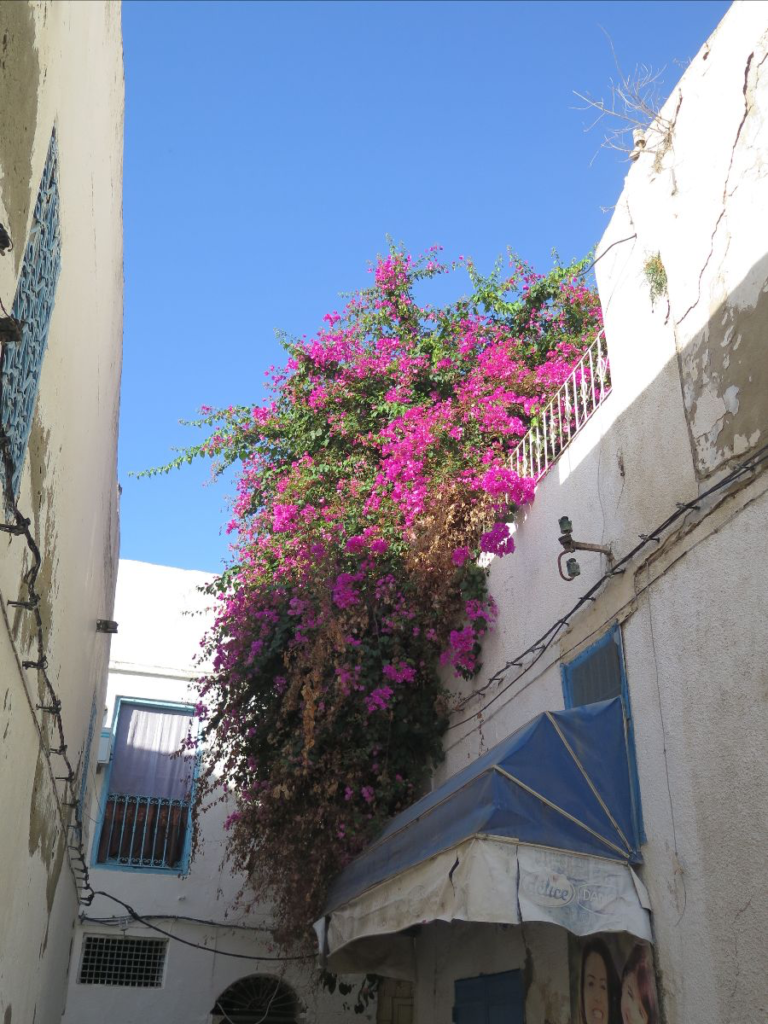
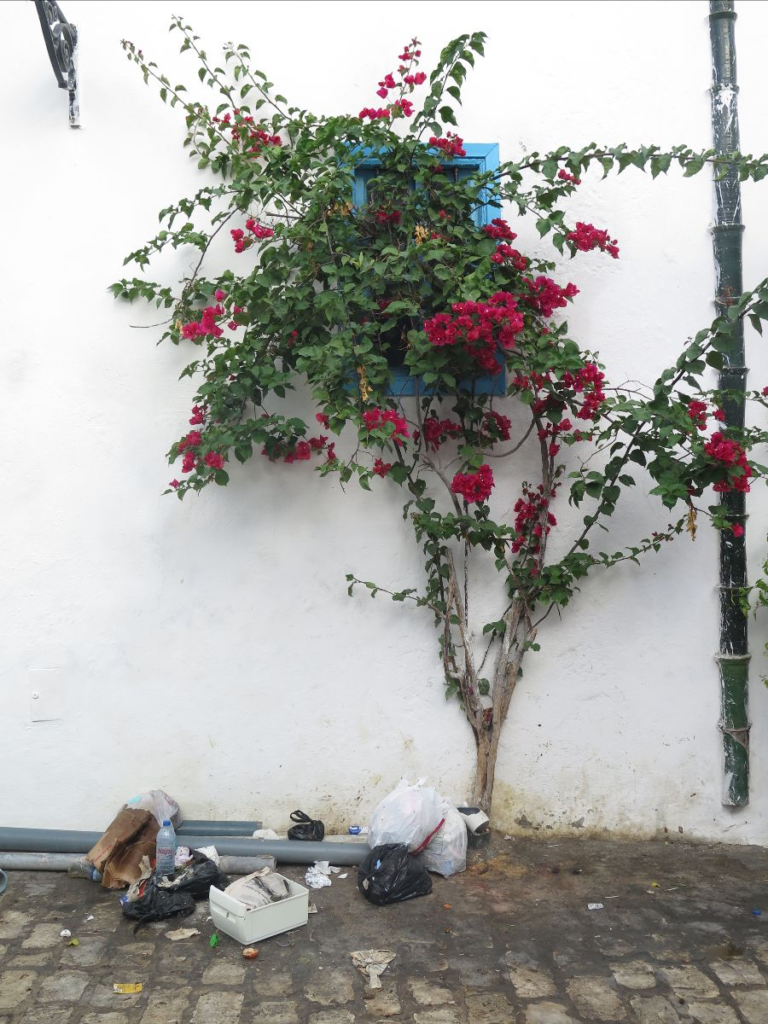
I love this picture of bougainvilleas growing next to a trash pile because bougainvilleas are incredibly resistant to pollutants and toxins. They’re the most common plant in the medina, making up about 25% of the medina’s ~2,000 public plants (not including weeds), according to a Fulbright student who mapped every single plant in the medina! Like algae blooms, bougainvilleas are a reminder that some plants and animals thrive on human disruption to ecosystems—and can even create beauty from it.
Unfortunately, the trash collection system in the medina is “leave it on the corner until someone comes and picks it up.” In this environment, it’s not surprising that bougainvilleas are thriving—they’re one of the few plants that can.
I suppose I should wrap this up with something about flowers growing in the concrete, or bougainvilleas growing out of a pile of trash, or, to quote the protagonist of the anti-utopic novel I will explore in next month’s blog: “The most beautiful peonies I ever saw were grown in almost pure cat excrement.” How’s this: may you rise from your Halloween hangover like a defiant, regal bougainvillea from a pile of of steaming rubbish.
Until next time,
Lucas